19 October 2026
Can a Bicycle Accident Lawyer Help if You Were Partly at Fault
Presented by @marconxir356
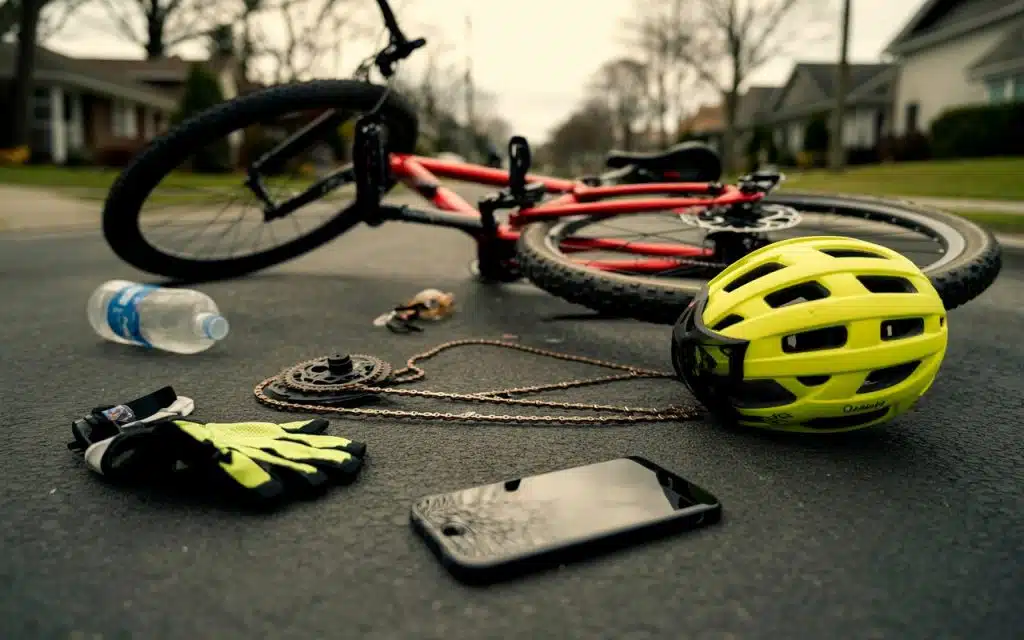
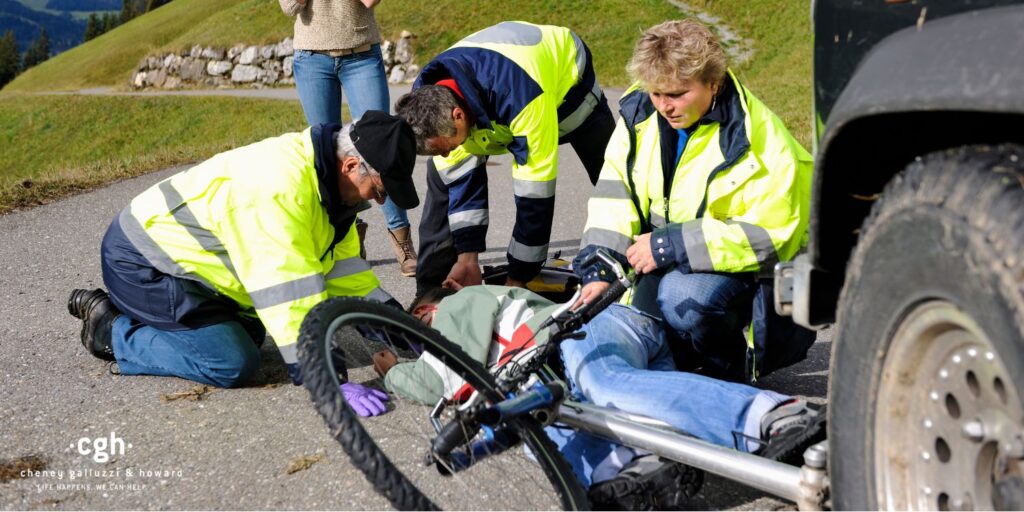
Yes, often a bicycle accident lawyer can help even when you were partly at fault. That surprises many injured riders, especially after a crash that happened fast, left room for second-guessing, and gave the driver or insurance company an easy opening. Cyclists tend to replay the moment in painful detail. Maybe you rolled slightly past a stop line. Maybe you changed position in the lane without much warning. Maybe you were riding at dusk and your rear light was weak. None of that automatically wipes out your claim.
Partial fault is common in bicycle cases. So is blame shifting. Drivers say the rider came out of nowhere. Insurers focus on the one thing the cyclist could have done better and treat it as the whole story. The law is usually more nuanced than that. In many states, an injured cyclist can still recover compensation even if the cyclist shares some responsibility for the collision. The amount may be reduced, but the claim is not necessarily lost.
That distinction matters because bicycle injuries are expensive. A rider can walk away from the scene and still end up with a fractured wrist, a torn rotator cuff, a concussion, or https://alexisnery349.inkharbory.com/posts/bicycle-accident-lawyer-guide-to-pain-and-suffering-damages a knee injury that turns daily commuting into months of treatment. If liability is disputed, those medical bills do not wait for the argument to be resolved.
Why partial fault does not end the case
Most injury claims turn on some version of negligence. The basic question is whether someone failed to use reasonable care and caused harm. In a bicycle crash, that can include a driver who turned across a bike lane, opened a car door into traffic, drifted into a shoulder, or passed too closely. It can also include a cyclist who ignored a signal, rode against traffic, or failed to use lights where required.
Courts and insurers do not always treat fault as all or nothing. Instead, they often assign percentages. One party may be 80 percent responsible and the other 20 percent. Or it may be closer. The legal rule that applies depends on the state, and that is one of the first reasons a Bicycle Accident Lawyer can help. A rider reading general advice online may see statements that are technically true in one state and wrong in another.
There are three broad systems in the United States. Under pure comparative negligence, you can recover damages even if you were mostly at fault, though your recovery is reduced by your share of fault. Under modified comparative negligence, you can recover only if your fault stays below a certain threshold, often 50 percent or 51 percent depending on the state. Under contributory negligence, used in only a handful of jurisdictions, even a small share of fault may bar recovery altogether.
That sounds abstract until you put numbers to it. Suppose your total damages are $100,000. If you are found 20 percent at fault in a comparative negligence state, your recovery may drop to $80,000. If you are 49 percent at fault in a state with a 50 percent bar, you may still recover $51,000. If you are 51 percent at fault in a state with a 51 percent bar, you may recover nothing. The difference between 49 percent and 51 percent can be the difference between meaningful compensation and no compensation at all. That is not a paperwork detail. It is the case.
Where fault fights usually happen in bicycle crashes
The legal dispute is rarely just about whether a collision occurred. It is about how it happened and whether each person acted reasonably in the seconds leading up to impact. Bicycle cases often involve a few recurring fault arguments.
A driver may claim the cyclist was outside the bike lane when the driver turned right. But bike lanes are not always mandatory, and even where they exist, riders may lawfully leave them to avoid debris, parked cars, drainage grates, or a narrowing lane. A lawyer who handles these cases knows that roadway design matters. The painted lane on the police diagram is not the whole story if the lane was blocked by trash bins, construction cones, or an illegally parked delivery vehicle.
Another common fight involves visibility. Insurance adjusters like to ask whether the cyclist wore bright clothing, had front and rear lights, or used reflectors. Those facts can matter, but not always in the simplistic way insurers suggest. A rider in dark clothing may still be plainly visible under streetlights. A driver who was texting or failed to yield does not get excused because the cyclist was not dressed like a traffic cone.
Then there are intersection cases, which are often messy. A cyclist may have entered on a stale yellow, or a driver may have accelerated to beat the light and turned across the rider’s path. Both may have made imperfect choices. The evidence often lives in timing, angles, skid marks, camera footage, witness recollections, and vehicle damage patterns. A lawyer’s job is not to pretend the cyclist was flawless. It is to place the facts in accurate proportion.
What a bicycle accident lawyer actually does in a partial fault case
The value of counsel becomes clearer when fault is disputed. A good Bicycle Accident Lawyer is not simply there to file forms or repeat what you say happened. The real work starts much earlier and goes deeper.
First, the lawyer investigates before the story hardens against you. Police reports in bike cases can be incomplete, especially if the officer arrived after the collision and relied heavily on the driver’s account. Witnesses disappear quickly. Nearby businesses overwrite security footage in days. Helmet damage, bent wheels, torn clothing, and scrape patterns on the pavement tell a story, but only if someone preserves them.
Second, the lawyer frames the law correctly. Cyclists are often judged by informal expectations rather than actual traffic rules. People say things like, “Bikes are supposed to stay on the edge,” or “He should have been on the sidewalk,” even where that is legally wrong or unsafe. Local ordinances, state vehicle codes, and roadway rules can cut sharply against the assumptions adjusters make in early calls.
Third, the lawyer limits unforced damage. Many injured riders, trying to be cooperative, give recorded statements too soon. They speculate about speed, admit uncertainty, or casually say “I may have been a little at fault.” That phrase can become the centerpiece of the insurer’s file. Context disappears. Pain medication, shock, and memory gaps are ignored. A lawyer helps the client communicate accurately and avoids turning a normal human attempt at fairness into a permanent liability admission.
Fourth, the lawyer develops damages thoroughly. Partial fault cases are not won by arguing liability alone. If fault may be shared, the numbers matter even more. A claim with well-documented medical treatment, wage loss, future care needs, and daily life impact has leverage. A thin file invites discounting from every angle.
An example from a typical urban crash
Picture a rider commuting home through a busy downtown corridor at about 6:15 p.m. Traffic is heavy. The bike lane runs beside parked cars and disappears near an intersection because of construction barriers. The cyclist moves left to avoid the obstruction. A driver in the next lane turns right across the cyclist’s path, claiming the rider “shot out” from nowhere.
On first read, both sides have something to say. The rider left the bike lane. The driver turned across an occupied lane of travel. If the insurer controls the narrative early, the case may be framed as reckless cycling. If a lawyer gets involved quickly, several questions emerge. Was the construction forcing cyclists into the lane? Had the driver signaled? Was the driver already alongside the cyclist or behind? Did the driver check mirrors? Was the turn made from the proper position? Did a city bus camera or storefront camera capture the approach?
A case like that often becomes a percentages fight rather than a yes or no fight. The cyclist may bear some share of fault if the move left was abrupt or poorly timed. The driver may bear a larger share if the turn crossed the cyclist’s lawful line of travel without yielding. Those distinctions are exactly where compensation is won or lost.
Insurance companies often overplay cyclist fault
Adjusters are not neutral fact finders. Their job is to evaluate exposure and settle claims for as little as reasonably possible. In bicycle cases, they often begin from a skepticism that motorists do not face to the same degree. Some still carry outdated assumptions that cycling is inherently unpredictable, that riders do not obey traffic laws, or that serious injury from a bicycle crash must involve rider error.
That bias shows up in familiar ways. The adjuster asks whether you were wearing a helmet even if the injury is to your leg or shoulder. They ask whether you had flashing lights, whether you were listening to music, whether you were in the bike lane, whether you “darted.” Those questions can be legitimate, but they are also part of a pattern. The insurer is building comparative negligence early.
A seasoned Bicycle Accident Lawyer knows how to answer that pattern with evidence instead of outrage. Outrage rarely moves a claim. Evidence does. If the road surface forced a lane change, document it. If the driver had a history of close-pass complaints, preserve it if discoverable. If the impact angle shows the cyclist was ahead and visible before the turn, explain it with photographs and, if needed, an accident reconstruction expert.
The evidence that tends to matter most
Not every case needs a stack of experts, but almost every disputed bicycle case rises or falls on practical evidence. Some forms are especially useful because they reduce room for storytelling after the fact.
- Photos and video from the scene, nearby homes, businesses, buses, or dash cameras
- Medical records that tie the injuries directly to the crash and show consistent treatment
- Witness statements gathered early, before memories blur or loyalties shift
- Damage patterns on the bike, vehicle, helmet, and clothing
- Roadway details such as signage, lane markings, sight lines, debris, and construction zones
These pieces work together. A bent front wheel may support the cyclist’s position at impact. Scrapes on the passenger side of a turning vehicle may undercut a claim that the rider hit the car from behind. A surgeon’s records may explain why a “minor” shoulder injury actually means six months without lifting overhead. The better the evidentiary picture, the harder it is for an insurer to inflate your share of blame.
When your own mistake still leaves room for recovery
People often ask a blunt question: what if I really did make a mistake? That honesty is useful. Many riders did make some mistake. The issue is whether that mistake caused the crash, and if so, how much it should matter.
Suppose a cyclist failed to use a headlight at dusk, but a driver ran a stop sign and struck the cyclist broadside in a well-lit intersection. The missing light may become part of the defense, but it may not carry much weight if the driver would have hit the cyclist regardless. On the other hand, if the crash happened on a dark rural road with limited visibility, the missing light could matter a great deal more.
Or imagine a rider wearing earbuds. Insurers love this fact. Yet earbuds alone do not prove causation. If the driver overtook the cyclist from behind and passed too closely, the rider’s ability to hear may not have changed anything. If the rider drifted into traffic after failing to hear a horn, the analysis may shift. Small facts matter differently depending on the mechanics of the crash.
This is where experienced judgment matters more than slogans. Not every bad fact kills a case. Not every good fact saves one. A lawyer who routinely handles bicycle claims can usually tell the difference between a manageable weakness and a fatal one.
State law can change the entire outcome
Because fault rules vary, the same crash can produce very different results depending on where it happened. That is one reason broad internet advice can mislead injured cyclists. A person may read that “being partly at fault does not matter” and take comfort where the local law is much less forgiving. Another may assume “I broke a rule, so I have no case” when the state actually allows reduced recovery.
There are also state-specific wrinkles beyond comparative fault rules. Some states have particular bicycle equipment statutes. Some cities regulate sidewalk riding differently from others. Local right of way rules, lane use rules, and safe passing laws can shape the analysis. In some places, a driver’s violation of a safety statute strongly supports liability. In others, the effect is more modest.
A Bicycle Accident Lawyer who knows the local courts, judges, and insurance defense habits brings more than legal theory. They know which facts tend to move settlement discussions, which experts are respected, and how local juries often react to bike lane disputes, helmet issues, and urban traffic behavior.
Damages are often undervalued in bicycle cases
Even where liability is clear enough, compensation can still be undercut if the injuries are minimized. Bicycle crashes produce a strange insurance dynamic. Because the vehicle damage may look modest compared with a high-speed car crash, insurers sometimes assume the injuries must also be modest. Anyone who has seen a rider land on an outstretched hand or shoulder knows how wrong that can be.
Fractures, ligament tears, dental trauma, facial scarring, traumatic brain injuries, and chronic neck pain are common. So are “invisible” injuries that derail normal life, such as post-concussion symptoms, vestibular issues, and pain that makes commuting, lifting children, or returning to exercise difficult for months.
A partial fault reduction hurts less when the underlying damages are fully documented. If the case is worth $20,000 and fault reduces it by 25 percent, that leaves $15,000. If the case is actually worth $120,000 but was documented poorly, the same percentage fight becomes far more costly. Good lawyering is not only about reducing fault allocation. It is about proving the full extent of loss.
What to do after the crash if fault may be disputed
The hours and days after a bicycle collision can shape the case more than most riders realize. People tend to focus on emergency care, which is right, but they often miss the evidence window. If you are physically able, a few steps can make a major difference later.
- Get medical evaluation promptly, even if you think you are mostly sore and shaken
- Preserve the bicycle, helmet, clothing, lights, and phone without repairing or washing them
- Take photographs of the scene, vehicle, injuries, and any road hazard or obstruction
- Avoid giving a recorded statement to the insurer before you understand your injuries and the facts
- Speak with a lawyer early if the driver or insurer is already blaming you
These steps are not about inflating a claim. They are about preventing a distorted one. In partial fault cases especially, the first version of events often gains momentum. If your side of the facts is thin, unsupported, or casually phrased, it becomes harder to correct later.
A lawyer can also help when the defendant is not just the driver
Cyclists sometimes assume the case is only against the motorist, but that is not always true. If a road defect contributed to the crash, a public entity or contractor may be involved. If a delivery driver caused the collision while working, an employer may share liability. If a car door opened into the bike lane, the driver may not be the only responsible person. If defective bike components worsened the injury, there may be a product issue in the background.
These cases become more complex fast. Different deadlines, notice rules, and insurance layers may apply. Partial fault can still enter the picture, but spreading responsibility accurately among all parties often changes the result. A rider who seems partly at fault relative to one defendant may still have a strong claim when the full chain of responsibility is examined.
Settlement leverage often depends on trial readiness
Insurance companies can sense when a claim is being presented for nuisance value and when it is being built for trial. That matters in disputed-fault bicycle cases. If the defense believes you will fold the moment they assign 40 percent blame to the cyclist, they have little reason to improve the offer. If they see organized medical proof, preserved evidence, legal research on bicycle rights, and a lawyer prepared to explain the roadway dynamics to a jury, their evaluation changes.
Most cases settle, but the better settlements tend to come from lawyers who prepare as though settlement may fail. Trial readiness is not chest beating. It is careful witness preparation, credible damages evidence, and a coherent explanation of why the cyclist’s conduct, even if imperfect, does not justify the insurer’s exaggerated blame allocation.
The honest answer
So can a bicycle accident lawyer help if you were partly at fault? Very often, yes. In many cases, that is precisely when counsel is most useful. Shared fault does not automatically destroy a claim. It creates a contest over percentage, causation, credibility, and value. Those are legal and factual issues, not just moral ones.
A rider can make a mistake and still be seriously wronged by a driver’s larger mistake. The law usually has room for that reality. The challenge is proving it with precision. If you were injured and now find yourself hearing that you caused your own crash, do not assume the matter is settled. In bicycle cases, fault is frequently negotiable because the first story is rarely the full one. A strong Bicycle Accident Lawyer helps make sure your share of blame, if any, is measured fairly, and that the harm you suffered is not discounted beyond recognition.
CGH Injury Lawyers
2701 Lawrence St Suite 201
Denver, CO 80205, United States
Phone: +1 720-669-8062
FAQ About Bicycle Accident Lawyer
Who is at fault if a car hits a bicycle?
Fault depends on the evidence and the traffic rules that applied to the collision. A driver, cyclist, or another party may share responsibility. Police reports, witness accounts, video, and the physical evidence can help establish what happened. A collision with a car does not automatically determine legal fault.
Can you sue someone for hitting you on a bike?
You may have a claim when another person's negligent conduct causes your injuries and losses. The available evidence, applicable deadlines, insurance coverage, and any shared fault affect your options. A lawyer can review the circumstances and explain whether an insurance claim or lawsuit is appropriate; compensation is not guaranteed.
What percentage does an injury lawyer usually take?
There is no single percentage that applies to every injury case. Many lawyers use a contingency fee based on a share of the recovery, with the terms stated in a written agreement. Ask how the percentage is calculated, whether it changes during litigation, and how case expenses are handled before signing.